
Public Education vs. State-Controlled Schooling: Why the Difference Matters for Learning, Self-Determination, and Wellbeing
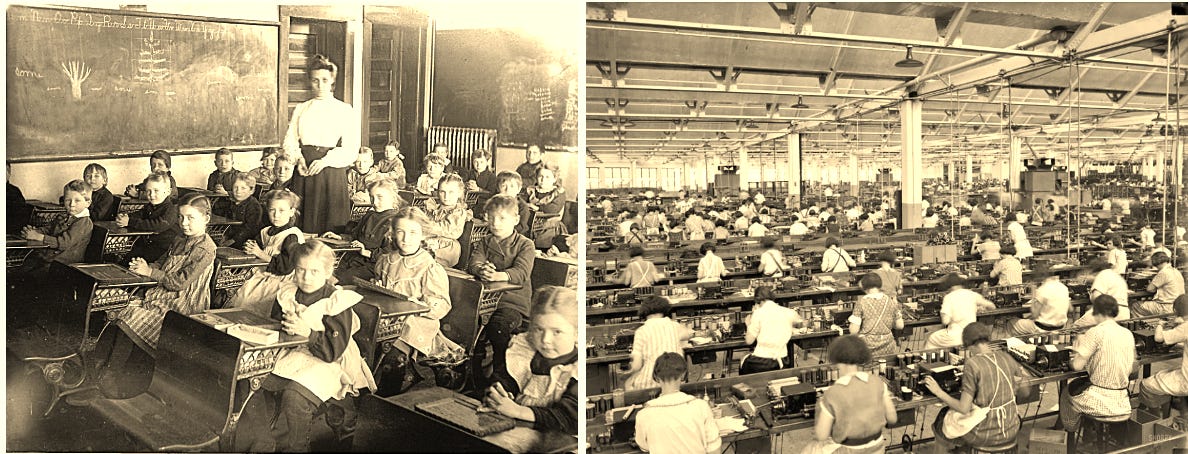
Education is a lifelong process. Schooling is a historical construct, a cultural product, and a deeply ideological one.

Introduction: Two Questions That Change Everything
My job as Research and Innovation Coordinator at the European Democratic Education Community (EUDEC) takes me to a lot of rooms with a lot of different people — civil society representatives, pre-service teachers, professors, ministry staff, think-tank researchers. I have a little routine I do at the start of almost every session with student teachers. I ask: “Who here is in favour of public education?” Every hand goes up. Sometimes all of them. Then I ask: “Who is in favour of state-run schooling?”
The room goes quiet. Faces shift. “Isn’t it the same thing?” someone usually asks.
It’s not. And that confusion matters more than most people realise.
Education is a lifelong process. It happens in kitchens and playgrounds and libraries and forests and informal conversations. Schooling, as most of us experienced it — with its age-sorted classrooms, standardised curricula, bells, grades, and adults making every meaningful decision — is not “education” by nature. It’s a historical invention, a cultural product, and a deeply ideological one at that.

The school model most of the world uses today was designed in Prussia around the 1750s, originally by August Hermann Francke - a military archbishop - with the explicit goal of producing a compliant, obedient population for his Kaiser Frederick. It was later imported to the United States by Horace Mann — who, notably, homeschooled his own children — and spread globally as American influence expanded in the mid-twentieth century. It was built for a purpose. Just not the purpose we’ve been told.
You don’t need a Ph.D to notice the contradictions. We sort children by birth year as if humans develop on a fixed schedule. We design lessons around knowledge that’s often outdated by the time students might use it. We claim to be preparing young people for democratic life while running institutions where they have almost no say in anything. We measure what’s easy to measure and call it learning. And we repeat practices (based on submission, competition, fear, and individualism) that the science of learning consistently tells us don’t work.
This article is an attempt to name that gap clearly, look at what the research actually says, and imagine something better.
1. Public Education and State-Controlled Schooling Are Not the Same Thing
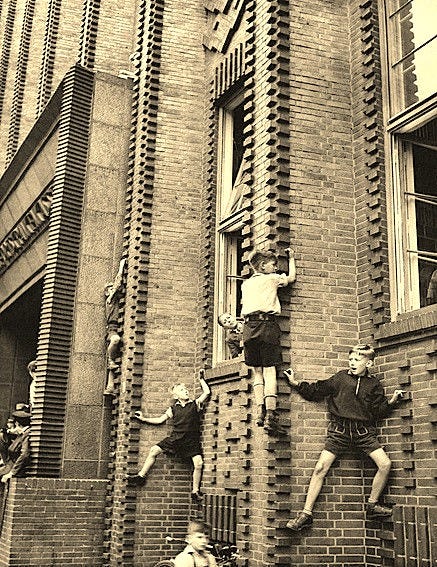
Here’s a useful thought experiment. Imagine a publicly funded school that is genuinely governed by its community — teachers, students, parents, and local residents all have a real voice in how it works. The curriculum is flexible, adapted to the children who actually show up. Learning is assessed through portfolios and projects, not high-stakes exams. Students have meaningful choices about what, how and with whom they learn.
Now imagine a different school, also publicly funded, where the curriculum is dictated nationally, teachers are evaluated on test scores, students have no say in school rules, and the main goal is performance on standardised exams. Both schools are “public.” But they are doing very different things.
Public education, at its best, is a democratic commitment: the idea that a society takes collective responsibility for the learning and flourishing of all its young people. State-controlled schooling is something more specific: a bureaucratic arrangement in which governments decide what children should learn, how they should be taught, and how their progress should be measured — usually with goals that go well beyond education itself: obedience to authority, discipline when following orders, banal patriotism to defend the motherland.
Research confirms that this isn’t just a semantic difference — it has real consequences for how schools work. Public schools are usually funded by the state, but vary enormously in how much the government actually controls what happens inside them (Hudson, 2007; Hall et al., 2024). In recent decades, many systems have shifted from regulating inputs (what gets taught, who teaches it) to regulating outputs — test scores, league tables, inspection reports — which creates a new kind of centralised control while appearing to give schools more freedom (Hudson, 2007; Wermke & Prøitz, 2019).
Example: England’s academy schools were introduced partly as a way to free schools from local authority control — more autonomy, the argument went. But research shows they remain tightly steered by national accountability frameworks, Ofsted inspections, and performance targets. The governance changed; the control didn’t disappear (West et al., 2023; Neri & Pasini, 2023).

There’s also a less comfortable history to reckon with. Mass public schooling has been used, repeatedly, for explicit political purposes: cementing national identity after conflicts, producing loyal citizens, and in more extreme cases, direct indoctrination (Dieudé & Prøitz, 2022; Lott, 1998). Banning books in schools has become a pastime for some U.S. lawmakers and ideological leaders. This isn’t only a story about authoritarian regimes. It’s built into the structure of schooling as an institution — one that was, from the start, designed to shape behaviour and belief, not just transmit knowledge. That was Franke’s task, nothing else.
The distinction that actually matters isn’t public versus private. It’s between systems designed around genuine human development and systems designed around compliance and standardisation. One can exist in publicly funded schools. The other often pretends to be the first.
2. What Controlling Schools Actually Do to Young People
There’s a well-established framework in psychology called Self-Determination Theory (SDT), developed by Edward Deci and Richard Ryan. The core idea is straightforward: people thrive when three basic needs are met. They need to feel that their actions are genuinely their own ( autonomy ). They need to feel capable and effective ( competence ). And they need to feel genuinely connected to the people around them ( relatedness ) (Deci & Ryan, 2015; Ryan & Deci, 2020).
These aren’t optional extras. Decades of research show they are the foundation of sustainable motivation, wellbeing, and real learning. And the research on conventional schooling is consistent: it tends to frustrate all three.
The Autonomy Problem
Think about what a typical school day asks of a child. Arrive at a fixed time. Sit in a specific seat. Follow a timetable set by someone else. Study subjects chosen by someone else. Be assessed in ways chosen by someone else. Comply, perform, repeat. The few moments of genuine choice — which elective to take, which topic to write about for an essay — exist within a structure of near-total external control.
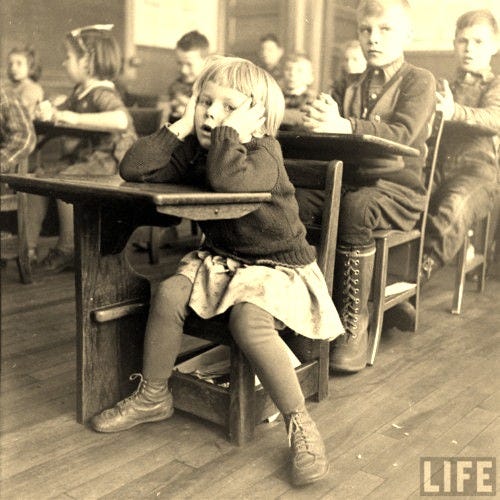
Unsurprisingly, research shows this pattern is directly linked to need frustration, low motivation, and sometimes outright defiance (Wehmeyer et al., 2021; Vasconcellos et al., 2020; Eckes et al., 2018; Deci & Ryan, 2015). When teaching becomes controlling — when it relies on pressure, surveillance, and threats — students don’t just disengage. They resist. This has been found in physical education, science, language learning, and across subjects and cultures (Haerens et al., 2015; Vasconcellos et al., 2020).
Example: A study of children learning English in a collectivist school setting found that fear of making mistakes — and specifically fear of being scolded by teachers — was a significant barrier to participation and agency in the classroom (Hargreaves & Elhawary, 2021). The children weren’t disengaged because they didn’t want to learn. They were disengaged because the environment made trying feel dangerous.
Traditional disciplinary practices also make genuine back-and-forth between teachers and students structurally difficult. The power differential isn’t incidental — it’s architectural. It’s built into the raised teacher’s desk, the rows of chairs facing the board, the rule that you raise your hand to speak, but the teacher can interrupt whenever it is deemed (Polivanova & Bochaver, 2022).
The Grades Trap
Most of us have been through it: studying hard for an exam, performing reasonably well, and then promptly forgetting almost everything within a few weeks. That’s not a personal failure. It’s what happens when motivation is external — when you’re learning for the grade rather than for the learning itself.
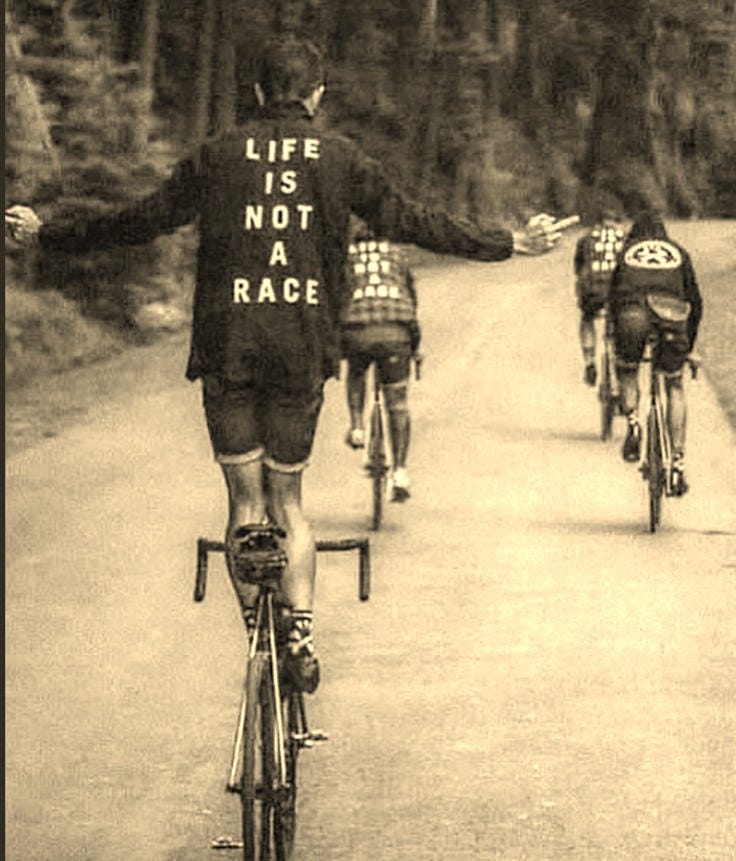
Heavy reliance on grades and extrinsic rewards, which is the daily currency of most schools, predictably erodes intrinsic motivation and self-determination (Ryan & Deci, 2020; Lillard, 2019). Research directly comparing teacher-directed instruction with self-directed learning finds that teacher-directed approaches produce no meaningful gain in autonomous motivation, while self-directed learning consistently increases students’ sense of ownership over their learning, their intrinsic interest, and their wellbeing (Schweder & Raufelder, 2023; Gupta et al., 2024; Saad & Abdullah, 2025).
Example: In high-stakes testing systems like those in South Korea, Japan, or the UK’s GCSE model, research consistently finds that students become increasingly driven by external pressure as exams approach — and that this narrowing of motivation is accompanied by higher anxiety, lower creativity, and a diminished sense of what learning is actually for (Ryan & Deci, 2020; Deci & Ryan, 2015). Students learn to perform, not to understand, or learn how to learn better, collaborate with others, think critically and understand the world as a complex system.
The consequences don’t stay in school. Young people who have been educated primarily through controlling, reward-focused systems often arrive in adulthood with a diminished sense of themselves as capable, curious, self-directed learners. That’s not a side effect. It’s a predictable outcome of a system that was never really designed with their learning in mind.
3. What Actually Works: Self-Direction, Autonomy, and Wellbeing
Here’s the good news: the research on what helps is just as consistent as the research on what harms.

When students are given real choice, when the purpose behind learning activities is explained rather than just imposed, when teachers acknowledge how students feel and treat their perspectives as worth taking seriously — motivation increases, wellbeing improves, and learning deepens (Guay, 2021; Yengkopiong, 2025; Ryan & Deci, 2020). This kind of teaching, called autonomy-supportive teaching, has been studied extensively across subjects, age groups, and countries, and the results are remarkably stable (Vasconcellos et al., 2020; Eckes et al., 2018; Muth & Lüftenegger, 2024; Duchatelet & Donche, 2019).
Example: A meta-analysis of SDT research in physical education — covering over 100 studies — found that autonomy-supportive teaching styles consistently produced higher intrinsic motivation, better emotional experience, and greater engagement compared to controlling styles (Vasconcellos et al., 2020). The subject was PE, but the pattern holds across every subject researchers have looked at.

One important nuance: structure and guidance are not the enemy of autonomy. Students benefit from clear frameworks, materials, and support. What matters is whether that structure comes with genuine autonomy support or with control. Structure combined with control — telling students what to do and pressuring them to comply — does not improve motivation. Structure combined with autonomy support — offering guidance while also giving genuine choice and rationale — does (Eckes et al., 2018).
What Alternative Models Show Us
Some of the most compelling evidence comes from schools and educational settings that have deliberately moved away from the conventional model.

Montessori schools, which give children significant choice over their activities and pace of learning, consistently show higher self-determination, stronger intrinsic motivation, and greater student wellbeing than matched conventional schools (Lillard, 2019). This isn’t because Montessori children are different. It’s because the environment is different.
Example: In Montessori classrooms, children of different ages work together on projects they choose themselves, moving around freely and returning to materials at their own pace. There are no gold stars, no grade-based rankings. Research finds that these children not only show higher intrinsic motivation — they also show stronger executive function and social skills (Lillard, 2019).

Self-directed education settings — where students have substantial agency over what, when, and how they learn, and where adults act as resources rather than authorities — show similarly striking results. A recent study found that young people in self-directed education settings reported strong intrinsic motivation and significantly better wellbeing than they had experienced in prior mainstream schooling (Carden, 2025).
Example: Democratic schools like Sudbury Valley in Massachusetts or Summerhill in England operate with no fixed curriculum and no compulsory classes. Students decide what they learn, for how long, and with whom. School meetings — attended equally by students and staff — make all institutional decisions. Critics predict chaos. Research finds high levels of self-direction, wellbeing, and — in follow-up studies — successful adult lives (Morrison, 2024; Marjanovic-Shane et al., 2023).
Even more modest innovations, like flipped classroom models and hybrid approaches that genuinely redistribute agency to students, show improved self-determination outcomes — as long as the shift in agency is real, rather than just a new packaging for the same top-down content (Hu et al., 2022; Schweder & Raufelder, 2023).
4. What Genuinely Democratic Schools Look Like
By now a pattern should be clear: the problem with conventional schooling isn’t any single bad practice. It’s the architecture. Changing one element while leaving the rest intact — adding a student council here, a “choice” period there — produces cosmetic change, not real transformation. Research on democratic education is blunt about this: you can’t bolt democracy onto an authoritarian institution and expect it to take root (Sant, 2019; Marjanovic-Shane et al., 2023).
What does real transformation require? The evidence points to changes across four interconnected areas.
Who Gets to Decide: Governance and Power
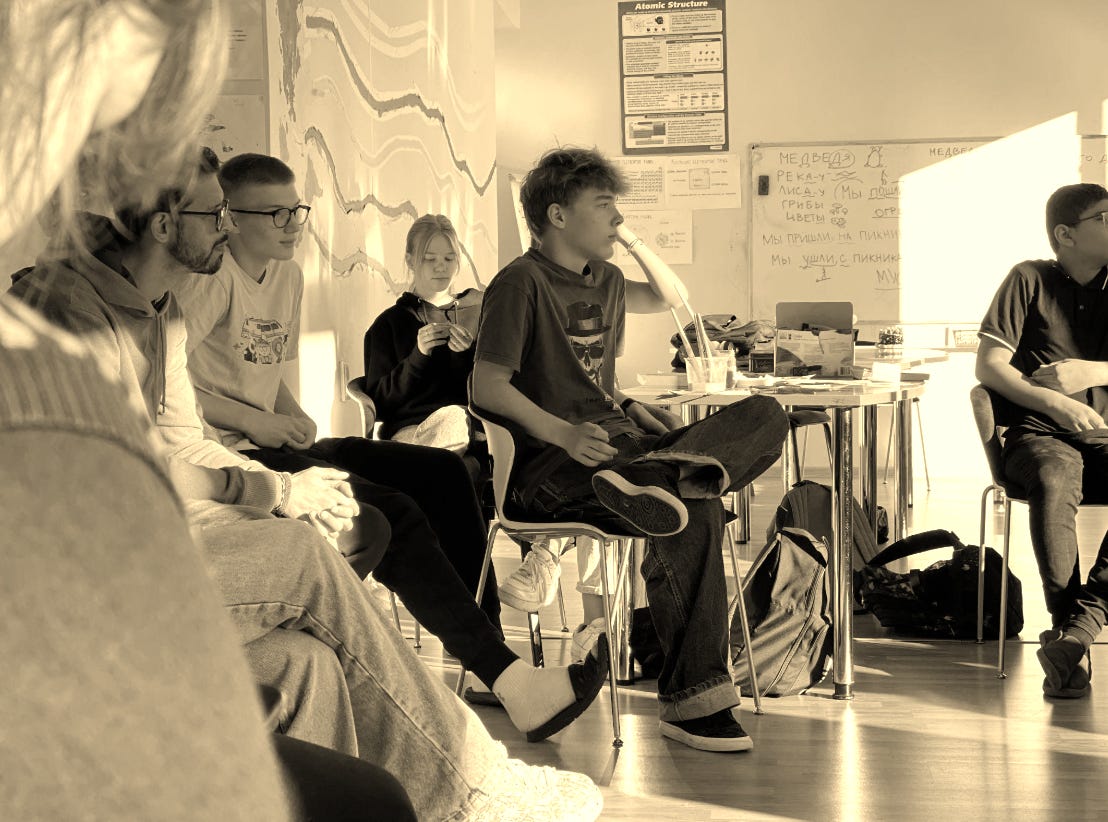
Genuine student voice is not a suggestion box or a student council that gets consulted and then ignored. It means structured roles in actual school decision-making — school meetings with real authority, governance councils where students help set the rules, projects that students initiate and lead (Lee, 2025; Morrison, 2024; Moreno-Romero et al., 2024).
Example: At many democratic schools, weekly school meetings bring together students and staff with equal voting rights on institutional decisions — from how shared spaces are used to how conflicts are resolved. Students who participate in these structures show significantly higher civic engagement and self-efficacy (Marjanovic-Shane et al., 2023).
Oftentimes, shared governance also means including parents and community members, not as passive recipients of newsletters, but as genuine partners in curriculum and school culture (Meireles & Neto, 2023; Allen & Gann, 2022). And it means being honest about who gets excluded from participation: democratic practices that only reach already-advantaged families don’t democratise anything (Sant, 2019; Charteris & Smardon, 2019).
What Gets Learned: Flexible, Living Curricula
A democratic curriculum isn’t the absence of content. It’s a curriculum flexible enough to be shaped by the actual people doing the learning — their interests, cultures, languages, and ways of making sense of the world — while retaining a small shared core that provides common ground (Adekanbi & Oladele, 2024; Walia, 2024; Daud et al., 2024).
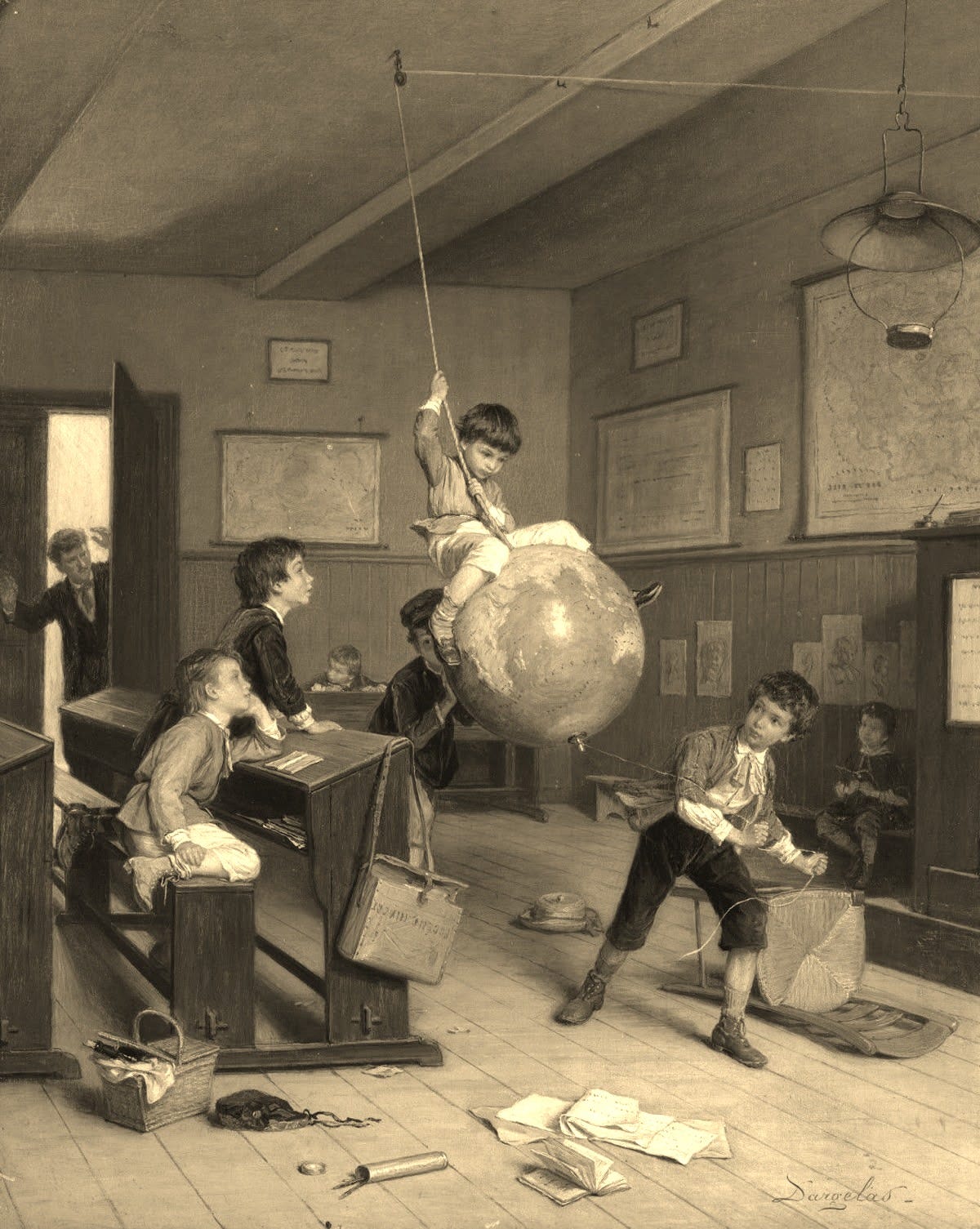
Holistic aims matter here: intellectual, emotional, social, and physical development, not just exam performance (Farid et al., 2025; Suharto et al., 2025; Li, 2025; Praviţchi, 2025). This isn’t soft or unambitious. It’s a recognition that a person who leaves school with high test scores but no curiosity, no social and emotional skills, and no sense of themselves as a learner has not been well educated.
Example: Forest schools in the UK and Scandinavia, which move much of their learning outdoors and allow children to set the agenda for exploration, have shown improvements in wellbeing, self-regulation, and intrinsic motivation — without any decline in literacy or numeracy outcomes (Suharto et al., 2025). The children are not learning less. They’re learning differently, and more durably.
How Learning Happens: Pedagogy and Assessment
Student-centred learning — projects, debates, collaborative problem-solving, experiential and nature-based work — develops autonomy, critical thinking, and social skills in ways that passive, teacher-fronted instruction simply cannot (Farid et al., 2025; Bhardwaj et al., 2025; Tendo, 2025). This doesn’t mean teachers disappear. It means they change role: from deliverers of content to facilitators of learning, designers of environments, mentors.

Assessment needs to catch up. Portfolios, presentations, peer feedback, and self-assessment are not easier than exams — they’re often harder, and they measure things that actually matter: the ability to reflect, communicate, collaborate, and apply knowledge in context (Li, 2025; Bhardwaj et al., 2025; Tendo, 2025).
Example: In some Finnish schools — which consistently rank among the best-performing in international comparisons — formal standardised testing is minimal, especially in early years. Assessment is primarily formative and dialogic: teachers talk with students about their learning rather than ranking them against each other. Finland also gives teachers significant professional autonomy to adapt their practice. The result is high performance and high wellbeing — a combination that high-stakes testing cultures struggle to achieve.
Teachers can’t do any of this without genuine institutional support: training in democratic and student-centred methods, professional freedom to experiment and adapt, and time for collaboration and reflection (Sant, 2019; Adekanbi & Oladele, 2024; Marjanovic-Shane et al., 2023). Teacher autonomy and student autonomy are not in competition. They reinforce each other.
Who Young People Are: Rights, Not Just Recipients
Underneath all of this is a more fundamental question: do we actually believe children are people? Not future people, not people-in-training — people, right now, with perspectives, preferences, rights, and a legitimate stake in the institutions that shape their daily lives?
Recognising children as rights-holders — not just recipients of adult decisions made on their behalf — is not a radical idea. It’s in the UN Convention on the Rights of the Child, which most countries have ratified. What’s radical is actually acting on it (Esteban, 2022). Schools that do so tend to look quite different from schools that don’t.
Conclusion: What Kind of Education Are We Defending?
Public education and state-controlled schooling are not the same thing. The first is a democratic commitment — the idea that society takes collective responsibility for the flourishing of its young people. The second is a historical institution with roots in social control, compliance, and political utility, one that has too often been dressed up as the first.

The research reviewed here makes the stakes concrete. Controlling, test-pressured, reward-focused schooling reliably frustrates autonomy, erodes intrinsic motivation, and damages wellbeing. Autonomy-supportive, student-centred, democratically governed learning does the opposite. We are not short of evidence. We are short of political will.
The good news is that the alternatives already exist. Democratic schools, forest schools, Agile Learning Centers, Sociocratic schools, Montessori schools, self-directed education communities, autonomy-supportive classrooms inside ordinary state schools — thousands of teachers and communities around the world are already demonstrating that learning can be more alive, more equitable, and more genuinely human. The question is whether we’re willing to learn from them.
So the next time someone asks “Are you in favour of public education?” — it might be worth pausing. The more important question is: what kind of education are we actually defending? And does it deserve defending?
The next article will offer practical suggestions for teachers and schools. This is not about utopianism in its negative sense — dreaming of solutions that will never materialize. On the contrary, Utopia represents a mindset committed to transforming the status quo, rooted in the belief that a better world is possible. Contact us at Unmute Learning (Estonia) and Evolving Education Consultancy (worldwide) to collaborate and build educational utopias that nurture children’s autonomy, self-directedness, and well-being.
Charlie Moreno-Romero, Ph.D
Unmute Learning CEO
References
Adekanbi, I., & Oladele, M. (2024). Curriculum theory: Empowering teachers in delivering effective teaching for children’s holistic development. Curricula: Journal of Curriculum Development. https://doi.org/10.17509/curricula.v3i2.70214
Allen, A., & Gann, N. (2022). The architecture of school governance: Rebuilding democratic legitimacy within an academized system. Management in Education, 36, 11–17. https://doi.org/10.1177/08920206211068132
Bhardwaj, V., Zhang, S., Tan, Y., & Pandey, V. (2025). Redefining learning: Student-centered strategies for academic and personal growth. Frontiers in Education. https://doi.org/10.3389/feduc.2025.1518602
Blackmore, J., MacDonald, K., Keddie, A., Gobby, B., Wilkinson, J., Eacott, S., & Niesche, R. (2022). Election or selection? School autonomy reform, governance and the politics of school councils. Journal of Education Policy, 38, 547–566. https://doi.org/10.1080/02680939.2021.2022766
Carden, J. (2025). What if the best curriculum was none at all? Education 3-13, 53, 1099–1113. https://doi.org/10.1080/03004279.2025.2514694
Charteris, J., & Smardon, D. (2019). Democratic contribution or information for reform? Prevailing and emerging discourses of student voice. Australian Journal of Teacher Education. https://doi.org/10.14221/ajte.2018v44n6.1
Daud, K., Khidzir, N., Hidayat, I., & Ismail, M. (2024). Empowering art and design education via a flexible curriculum. KnE Social Sciences. https://doi.org/10.18502/kss.v9i15.16176
Deci, E., & Ryan, R. (2015). Optimizing students’ motivation in the era of testing and pressure: A self-determination theory perspective (pp. 9–29). https://doi.org/10.1007/978-981-287-630-0_2
Dieudé, A., & Prøitz, T. (2022). Curriculum policy and instructional planning: Teachers’ autonomy across various school contexts. European Educational Research Journal, 23, 28–47. https://doi.org/10.1177/14749041221075156
Dieudé, A., & Prøitz, T. (2024). School leaders’ autonomy in public and private school contexts: Blurring policy requirements. Nordic Studies in Education. https://doi.org/10.23865/nse.v44.5762
Dronkers, J., & Avram, S. (2015). What can international comparisons teach us about school choice and non-governmental schools in Europe? Comparative Education, 51, 118–132. https://doi.org/10.1080/03050068.2014.935583
Dronkers, J., & Róbert, P. (2008). Differences in scholastic achievement of public, private government-dependent, and private independent schools. Educational Policy, 22, 541–577. https://doi.org/10.1177/0895904807307065
Duchatelet, D., & Donche, V. (2019). Fostering self-efficacy and self-regulation in higher education: A matter of autonomy support or academic motivation? Higher Education Research & Development, 38, 733–747. https://doi.org/10.1080/07294360.2019.1581143
Eckes, A., Großmann, N., & Wilde, M. (2018). Studies on the effects of structure in the context of autonomy-supportive or controlling teacher behavior on students’ intrinsic motivation. Learning and Individual Differences, 62, 69–78. https://doi.org/10.1016/j.lindif.2018.01.011
Esteban, M. (2022). Children’s participation, progressive autonomy, and agency for inclusive education in schools. Social Inclusion. https://doi.org/10.17645/si.v10i2.4936
Farid, M., Asro, M., Muttakin, M., & Ahsani, E. (2025). Pendekatan holistik dalam pendidikan. Al-Mubtadi: Jurnal Pendidikan Guru Madrasah Ibtidaiyah. https://doi.org/10.58988/almubtadi.v2i2.391
Guay, F. (2021). Applying self-determination theory to education: Regulations types, psychological needs, and autonomy supporting behaviors. Canadian Journal of School Psychology, 37, 75–92. https://doi.org/10.1177/08295735211055355
Gupta, N., Ali, K., Jiang, D., Fink, T., & Du, X. (2024). Beyond autonomy: Unpacking self-regulated and self-directed learning through the lens of learner agency — a scoping review. BMC Medical Education, 24. https://doi.org/10.1186/s12909-024-06476-x
Haerens, L., Aelterman, N., Vansteenkiste, M., Soenens, B., & Petegem, S. (2015). Do perceived autonomy-supportive and controlling teaching relate to physical education students’ motivational experiences through unique pathways? Psychology of Sport and Exercise, 16, 26–36. https://doi.org/10.1016/j.psychsport.2014.08.013
Hall, J., Møller, J., & Rönnberg, L. (2024). (Re)configurations of public education. Critical Studies in Education. https://doi.org/10.1080/17508487.2024.2420340
Hargreaves, E., & Elhawary, D. (2021). Children’s experiences of agency when learning English in the classroom of a collectivist culture. System, 98, 102476. https://doi.org/10.1016/j.system.2021.102476
Hu, T., Zhang, M., Liu, H., Liu, J., Pan, S., Guo, J., Tian, Z., & Cui, L. (2022). The influence of “small private online course + flipped classroom” teaching on physical education students’ learning motivation. Frontiers in Psychology, 13. https://doi.org/10.3389/fpsyg.2022.938426
Hudson, C. (2007). Governing the governance of education: The state strikes back? European Educational Research Journal, 6, 266–282. https://doi.org/10.2304/eerj.2007.6.3.266
Lee, J. (2025). Centering student voice in school: An action research. Korean Educational Research Association. https://doi.org/10.30916/kera.63.1.449
Li, X. (2025). The curriculum planning and implementation for mindfulness education and diversified humanism based on big data. Scientific Reports, 15. https://doi.org/10.1038/s41598-025-95491-z
Lillard, A. (2019). Shunned and admired: Montessori, self-determination, and a case for radical school reform. Educational Psychology Review. https://doi.org/10.1007/s10648-019-09483-3
Lin, A. (2025). Comparative analysis of public and private secondary school education systems in the United States. Journal of Education and Educational Policy Studies. https://doi.org/10.54254/3049-7248/2025.23519
Lott, J. (1998). Public schooling, indoctrination, and totalitarianism. Public Choice & Political Economy eJournal. https://doi.org/10.2139/ssrn.162791
Marjanovic-Shane, A., Kullenberg, T., & Gradovski, M. (2023). Scandinavian experiments in democratic education. Dialogic Pedagogy: An International Online Journal. https://doi.org/10.5195/dpj.2023.477
Meireles, A., & Neto, P. (2023). Gestão democrática e participativa. RCMOS — Revista Científica Multidisciplinar O Saber. https://doi.org/10.51473/rcmos.v1i1.2023.1315
Mockler, N., Hogan, A., Lingard, B., Rahimi, M., & Thompson, G. (2020). Explaining publicness (pp. 198–211). https://doi.org/10.4324/9780429330025-16
Moreno-Romero, C., Enn, Ü., Savvani, S., & Pantazis, A. (2024). Educational commons facilitating student voice: An ethnographic approach. Education 3-13, 52, 891–910. https://doi.org/10.1080/03004279.2024.2331952
Morrison, K. (2024). Student voice and participatory self-governance at a German democratic free school. On the Horizon. https://doi.org/10.1108/oth-12-2023-0041
Muth, J., & Lüftenegger, M. (2024). Associations between autonomy-supportive teaching, the use of non-academic ICTs, and student motivation in English language learning. Sustainability. https://doi.org/10.3390/su16031337
Neri, L., & Pasini, E. (2023). Heterogeneous effects of school autonomy in England. Economics of Education Review. https://doi.org/10.1016/j.econedurev.2023.102366
Nordholm, D., Arnqvist, A., & Nihlfors, E. (2021). Sense-making of autonomy and control: Comparing school leaders in public and independent schools in a Swedish case. Journal of Educational Change, 23, 497–519. https://doi.org/10.1007/s10833-021-09429-z
Polivanova, K., & Bochaver, A. (2022). Is students’ autonomy possible at contemporary school? Psychological Science and Education. https://doi.org/10.17759/pse.2022270301
Praviţchi, G. (2025). Development of school curriculum from the perspective of optimising students’ perception. Studia Universitatis Moldaviae. https://doi.org/10.59295/sum5(185)2025_30
Pritchett, L., & Viarengo, M. (2015). Does public sector control reduce variance in school quality? Education Economics, 23, 557–576. https://doi.org/10.1080/09645292.2015.1012152
Ryan, R., & Deci, E. (2020). Intrinsic and extrinsic motivation from a self-determination theory perspective: Definitions, theory, practices, and future directions. Contemporary Educational Psychology. https://doi.org/10.1016/j.cedpsych.2020.101860
Saad, S., & Abdullah, A. (2025). Exploring learner autonomy: A conceptual perspective on self-directed learning in higher education. International Journal of Modern Education. https://doi.org/10.35631/ijmoe.724092
Sant, E. (2019). Democratic education: A theoretical review (2006–2017). Review of Educational Research, 89, 655–696. https://doi.org/10.3102/0034654319862493
Schweder, S., & Raufelder, D. (2023). Does changing learning environments affect student motivation? Learning and Instruction. https://doi.org/10.1016/j.learninstruc.2023.101829
Shaturaev, J. (2021). A comparative analysis of public education system of Indonesia and Uzbekistan. Bioscience Biotechnology Research Communications. https://doi.org/10.21786/bbrc/14.5/18
Suharto, T., Syaifuddin, M., & Lawton, M. (2025). The idea of ‘flipped curricula’ and letting students design their own classes. At-Tarbawi: Jurnal Kajian Kependidikan Islam. https://doi.org/10.22515/attarbawi.v10i1.11785
Tendo, S. (2025). Student-centred teaching and learning new curriculum practices, a case of a rural public secondary school in Tororo district. Interactive Learning Environments, 33, 4082–4092. https://doi.org/10.1080/10494820.2025.2457354
Vasconcellos, D., Parker, P., Hilland, T., Cinelli, R., Owen, K., Kapsal, N., Lee, J., Antczak, D., Ntoumanis, N., Ryan, R., & Lonsdale, C. (2020). Self-determination theory applied to physical education: A systematic review and meta-analysis. Journal of Educational Psychology, 112, 1444–1469. https://doi.org/10.1037/edu0000420
Walia, A. (2024). Flexible in curriculum to meet the objectives of the program of the institution. International Journal For Multidisciplinary Research. https://doi.org/10.36948/ijfmr.2024.v06i02.14660
Wehmeyer, M., Cheon, S., Lee, Y., & Silver, M. (2021). Self-determination in positive education. The Palgrave Handbook of Positive Education. https://doi.org/10.1007/978-3-030-64537-3_9
Wermke, W., & Prøitz, T. (2019). Discussing the curriculum-Didaktik dichotomy and comparative conceptualisations of the teaching profession. Education Inquiry, 10, 300–327. https://doi.org/10.1080/20004508.2019.1618677
West, A., Wolfe, D., & Yaghi, B. (2023). Governance of academies in England: The return of ‘command and control’? British Journal of Educational Studies, 72, 131–154. https://doi.org/10.1080/00071005.2023.2258191
Yengkopiong, J. (2025). The way forward for secondary school students: The role of self-determination theory and intrinsic motivation. East African Journal of Education Studies. https://doi.org/10.37284/eajes.8.1.2643
Hi Charlie, Thank you. Are you interested in feedback with a bit of criticism and disagreement? I don't want to assume you are, although of course, in line with a democratic commitment, I also assume you would not be close to it. It's more a question of time and space. If you are, I could send an email with some ideas and other references. Cheers, Dorothée
Brilliant piece Charlie - and not just because I agree with every word of it. Needs to be published - have you thought of sending it to Dana Mitra who edits IJSV - International Journal of Student Voice at Penn State Uni. Or to ConnectEd in Australia (Melbourne Uni). or Forum in UK. You are really spreading your wings now Suvemae no longer takes all your energy. Great!