
When the Dome Doesn’t Fit
On the gift of mistakes, the richness of learner-led experience, and why a wrong calculation can teach more than any standardised test ever could.

Some years ago, while doing my Ph.D research on the connections between democratic education and a framework designed to support education for social justice and inclusion, I was told a story about the value of learner-initiated learning, mistakes in learning, and caring, inclusive, and supporting learning environments.
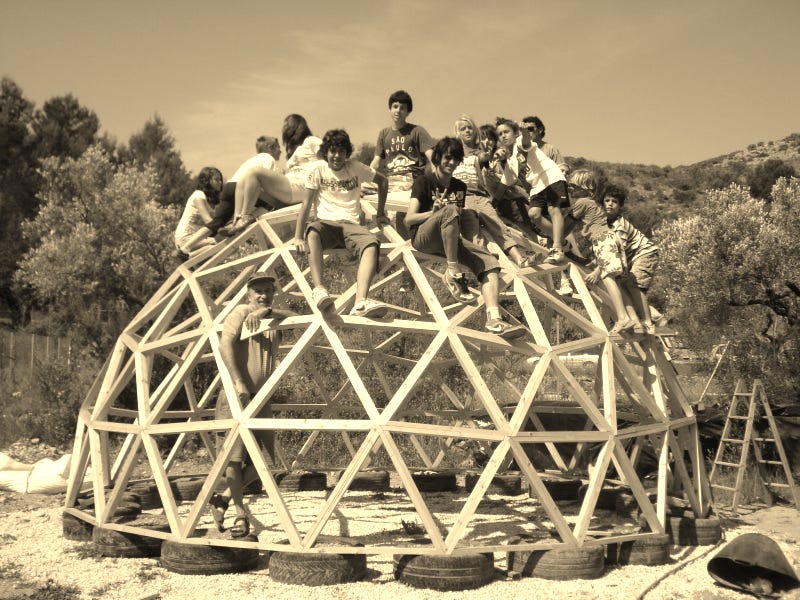
Somewhere in southern Spain, in the sun-warmed courtyard of a democratic school, a child arrived one morning with an idea. Not a worksheet. Not an assignment handed down from above. An idea:
I want to build a geodesic dome.
The school had no expertise in this. No geometry teacher with a unit plan. No carpentry curriculum. What they had was something more important — a culture that took children’s ideas seriously. So they looked around. A parent turned out to be an architect. He said yes. And just like that, a learning project was born — not from an institution’s syllabus, but from a child’s curiosity.
What happened next is worth sitting with. Other children, drawn by the sight of activity and wood and plans being sketched out, began to drift over and join in. They measured lengths of timber. They talked through angles. They argued about how the pieces should fit together. They learned — not because someone told them to, but because they wanted to see this thing get built.
“The mistake wasn’t the end of the project. It was, in a very real sense, the beginning of the deeper one.”
Then, at a critical moment, something went wrong. One of the children had made an error in the calculations. The pieces they had cut with such care didn’t fit together. The dome wouldn’t close.
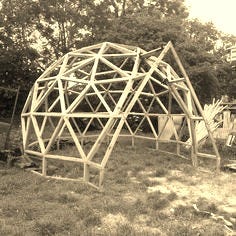
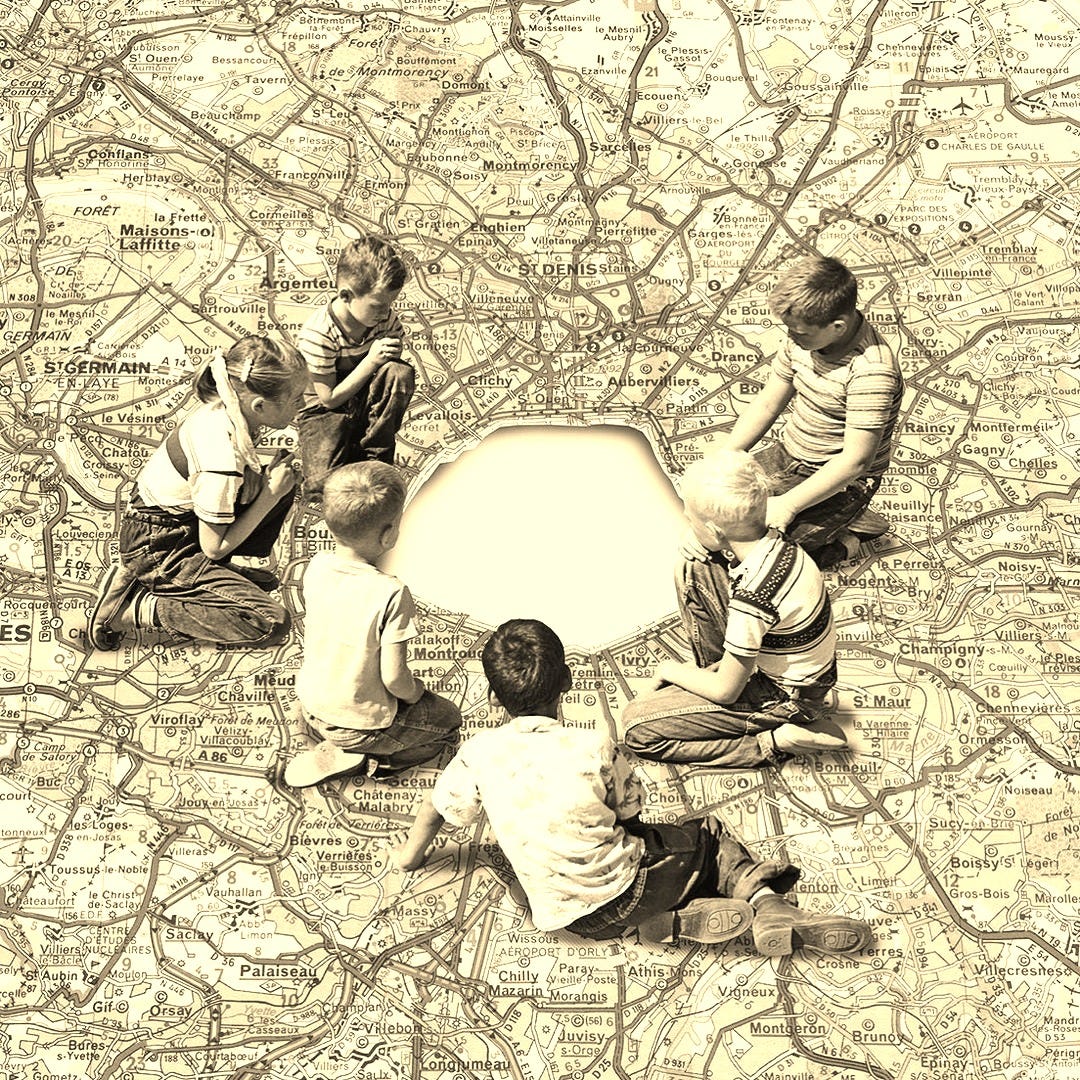
In a conventional classroom, this might have been a quietly devastating moment — a red mark, a corrected score, a lesson in what happens when you get it wrong. But here, something different unfolded. The mistake wasn’t assigned to its maker as a source of shame. Instead, it became the group’s shared problem. The children gathered around it. They puzzled over what had gone wrong. They re-examined the geometry. They talked about how to fix the pieces, or whether to start again. They navigated frustration, disagreement, and — eventually — resolution.
The mistake wasn’t the end of the project. It was, in a very real sense, the beginning of the deeper one.
What the research tells us about errors
This story might sound like a romantic anecdote, but it maps closely onto what decades of research in learning science actually shows. Making errors — and then working through them with support and feedback — is one of the most powerful drivers of genuine understanding. Studies consistently find that errorful generation followed by corrective feedback can outperform error-free study for long-term memory and comprehension.¹²³
Errors are particularly potent when learners are asked to explain why an answer was wrong, and to compare it with the correct solution. This kind of elaboration — the very thing those children were doing around their mismatched wood — significantly boosts post-test performance.⁴⁵ A wrong calculation, actively examined, teaches geometry in a way that copying a correct formula simply cannot.
Perhaps more importantly, researchers describe conditions that make errors productive: timely and meaningful feedback, tasks that activate prior knowledge, and the opportunity to revisit and resolve earlier mistakes.³⁶ The dome project met all three. The architect-parent was there to guide. The children’s own curiosity was prior knowledge in its most alive form. And the mistake was not swept under the rug — it was returned to, examined, and worked through together.
Yet despite all this evidence, students typically try to avoid errors even in low-stakes settings, while teachers — under institutional pressure — rarely build structured opportunities for deliberate mistake-making into their teaching.⁷⁸ The culture of schooling, in most places, is a culture of getting things right the first time.
Age-mixing, collaboration, and learning as a social act
There’s another dimension to the dome story that deserves attention: nobody assigned those roles. An older child who understood trigonometry worked alongside a younger one who was better at spatial thinking. An architect offered knowledge without taking over. Children who joined mid-project learned from those who had been there from the start.
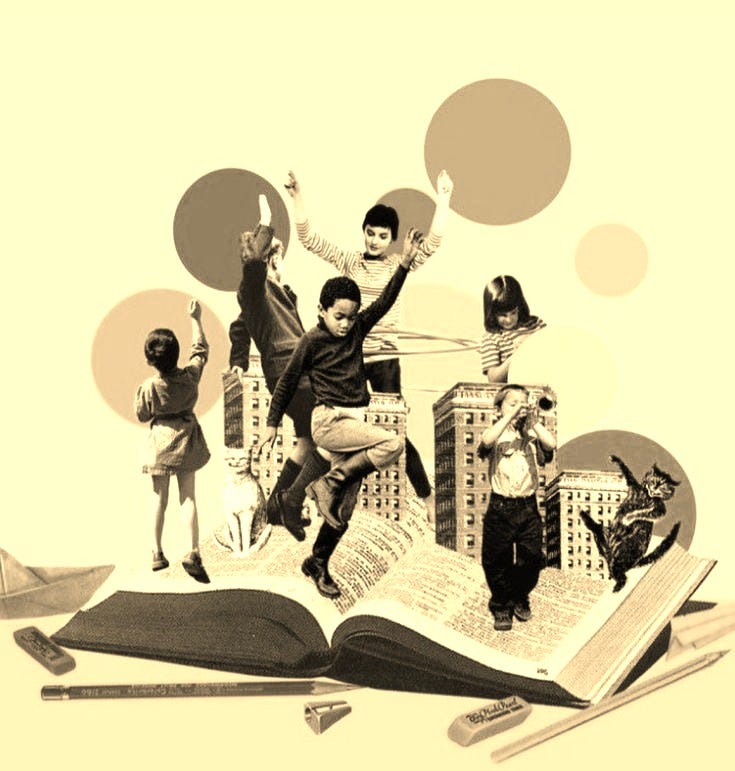
This is age-mixed, peer-driven, experiential learning — and it is vastly underused in formal education. When learners of different ages share a space and a purpose, knowledge flows in multiple directions. Younger children are exposed to concepts beyond their usual grade level. Older ones consolidate their own understanding by explaining it. Everyone sees that nobody knows everything — and that asking for help is simply part of how learning works.
Experiential learning of this kind — learning by doing, by failing, by rebuilding — has long been understood as one of the deepest forms of knowledge acquisition. But it demands time, uncertainty, and the willingness to not know how things will turn out. These are qualities that standardised systems struggle to accommodate.
The problem with punishment and grades
Imagine for a moment that, instead of gathering around the problem, the adults in that Spanish schoolyard had pulled the child responsible for the miscalculation aside and given them a failing mark. What would have been lost?

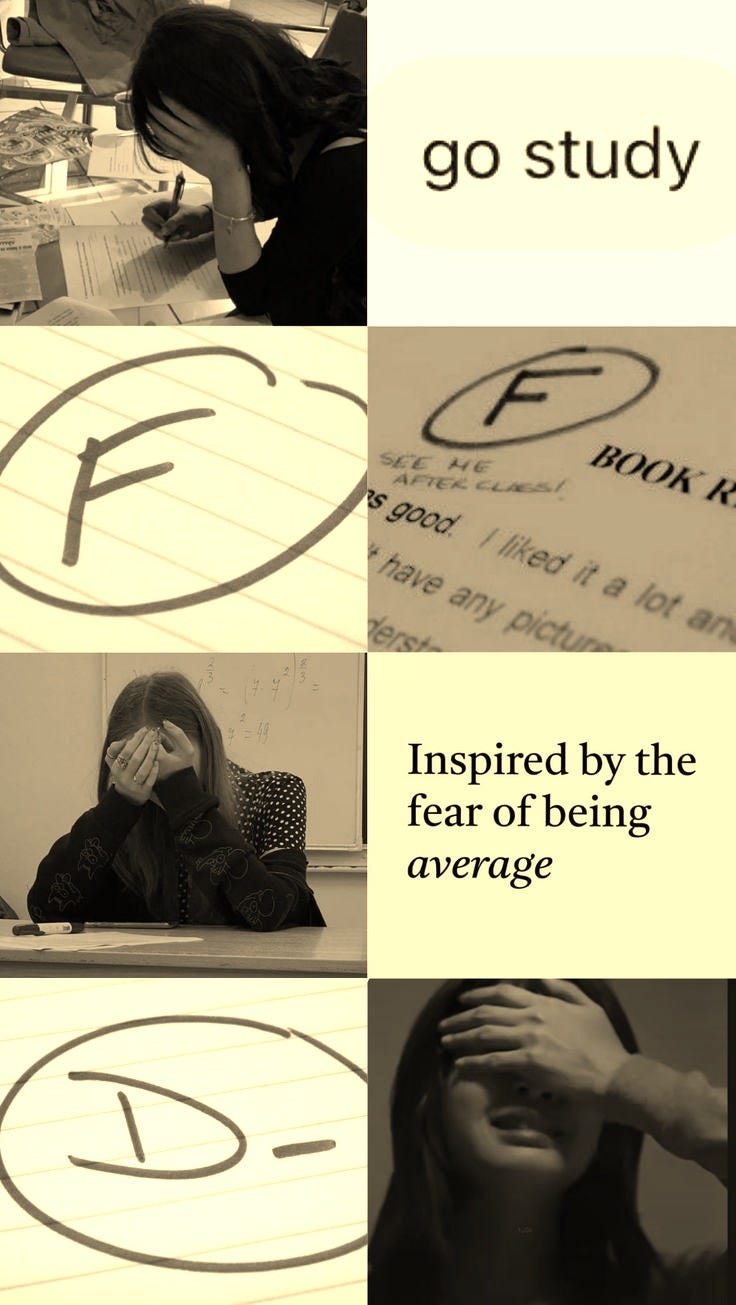
Grades and punitive feedback send a clear signal: mistakes have consequences. The rational response, for any child who has absorbed this message, is to minimise risk — to attempt only what you’re already sure of, to avoid the creative leap, to stay close to what the teacher wants rather than follow your own thread of thinking. Research bears this out: fear of failure actively constrains initiative, creativity, and willingness to collaborate.⁹¹⁰ When the penalty for being wrong is humiliation or a bad mark, the impulse is not to try harder next time — it is to try safer.
There is a profound irony here. Grades are meant to communicate learning. But when applied punitively — when a child’s natural process of figuring something out is interrupted by judgment — they can actively suppress the very conditions under which learning flourishes.
What standardised examinations miss
The dome project assessed nothing — in the formal sense. No rubric. No test paper. No score to submit to a ministry of education. And yet what those children learned — geometry, spatial reasoning, measurement, planning, collaboration, conflict navigation, persistence, empathy — was extraordinary.
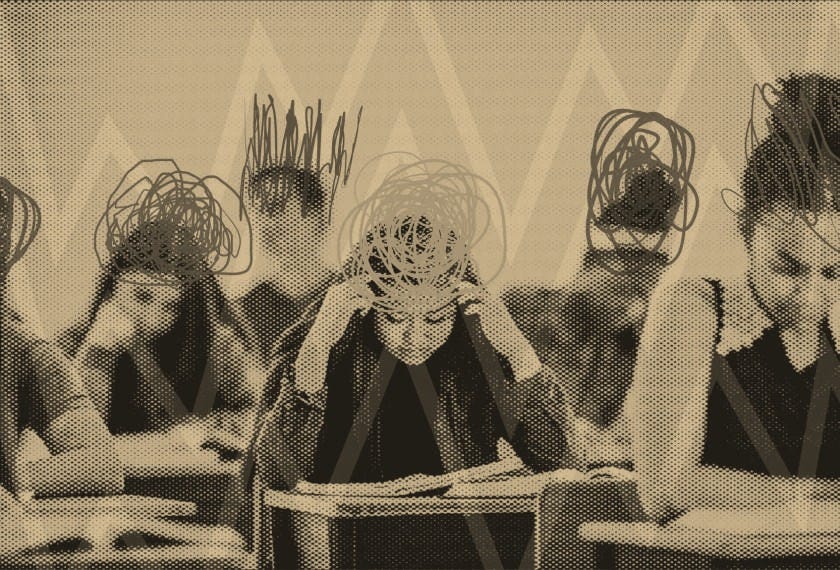
Standardised examinations are, by design, a narrow instrument. They tend to measure what is easily measurable: recall, pattern-matching, the ability to reproduce information under time pressure. Research across multiple countries and educational systems confirms that they routinely fail to capture creativity, problem-solving, interpersonal skill, long-term growth, or diverse forms of intelligence.⁹¹¹¹²¹³ They narrow curriculum and pedagogy, pushing teachers toward rote instruction and away from open-ended inquiry.¹²¹⁴¹⁵ And they introduce anxiety and inequity — their results are shaped as much by socioeconomic background and access to preparation as by learning itself.¹¹¹⁵¹⁶
This is not to say standardised assessment has no value. At the systems level, it can provide useful accountability data. But when it becomes the dominant logic of an entire school culture — when the question behind every lesson is ‘will this be on the exam?’ — something essential is lost. The child who wants to build a dome doesn’t fit the exam. The child who makes a magnificent, instructive mistake doesn’t fit the exam. The knowledge that emerges from collaborative struggle, from uncertainty, from the slow satisfaction of actually building something — none of this fits the exam.
“Real learning is rarely tidy. It involves not knowing, getting it wrong, trying again, and asking for help.”
Toward learning environments that honour uncertainty
The dome in that Spanish courtyard may or may not have been structurally perfect in the end. It doesn’t really matter. What was built, alongside the physical structure, was something less visible and far more durable: a group of children who had experienced what it feels like to pursue a real problem, to hit a real obstacle, and to find their way through it together.
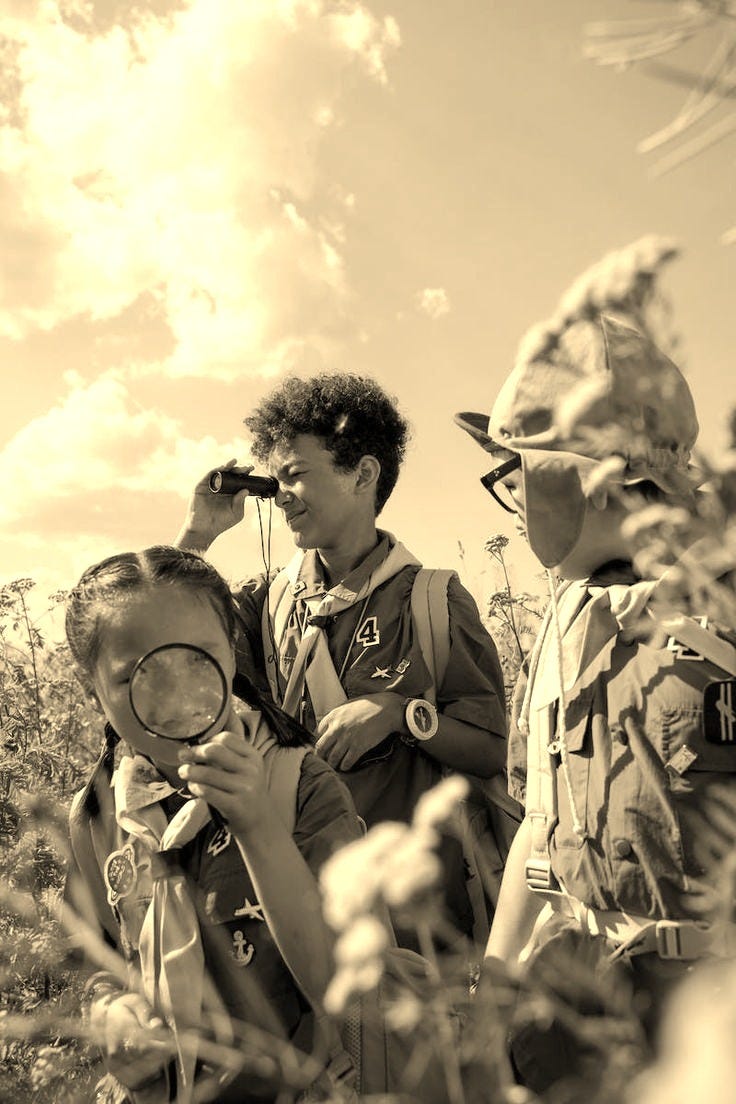
Real learning is rarely tidy. It involves not knowing, getting it wrong, trying again, and asking for help. It involves the discomfort of a half-built structure and the satisfaction — hard-won — of figuring out why it didn’t fit. It involves the kind of empathy that grows when a group of people choose solidarity over blame.
These are not soft outcomes. They are, arguably, the most important things education can offer — and they are precisely what most standardised systems are least equipped to cultivate.
Learning environments rooted in collaboration, care, and genuine uncertainty are not idealistic luxuries. They are, the evidence suggests, closer to how human beings actually learn.
Work with Unmute Learning
If you are building, strengthening, or reimagining a learning environment — whether a school, a community project, a youth programme, or something that doesn’t have a name yet — Unmute Learning would love to hear from you. We work with educators, parents, learners, and communities to create spaces where collaboration, uncertainty, empathy, and care are not afterthoughts, but foundations. Get in touch with us to begin the conversation.
REFERENCES
1. Metcalfe, J. (2017). Learning from errors. Annual Review of Psychology, 68, 465–489. https://doi.org/10.1146/annurev-psych-010416-044022
2. Metcalfe, J., Xu, J., Vuorre, M., Siegler, R., Wiliam, D., & Bjork, R. (2024). Learning from errors versus explicit instruction in preparation for a test that counts. British Journal of Educational Psychology. https://doi.org/10.1111/bjep.12651
3. Mera, Y., Rodríguez, G., & Marin-Garcia, E. (2021). Unraveling the benefits of experiencing errors during learning. Psychonomic Bulletin & Review, 29, 753–765. https://doi.org/10.3758/s13423-021-02022-8
4. Loibl, K., & Leuders, T. (2019). How to make failure productive: Fostering learning from errors through elaboration prompts. Learning and Instruction. https://doi.org/10.1016/j.learninstruc.2019.03.002
5. Zhang, Q., & Fiorella, L. (2022). An integrated model of learning from errors. Educational Psychologist, 58, 18–34. https://doi.org/10.1080/00461520.2022.2149525
6. Wong, S., & Lim, S. (2018). Prevention–Permission–Promotion: A review of approaches to errors in learning. Educational Psychologist, 54, 1–19. https://doi.org/10.1080/00461520.2018.1501693
7. Pan, S., Sana, F., Samani, J., Cooke, J., & Kim, J. (2020). Learning from errors: students’ and instructors’ practices, attitudes, and beliefs. Memory, 28, 1105–1122. https://doi.org/10.1080/09658211.2020.1815790
8. Steuer, G., Tulis, M., & Peterson, E. (2024). Learning from errors and failure in educational contexts. British Journal of Educational Psychology. https://doi.org/10.1111/bjep.12723
9. Paramole, O., & Adeoye, M. (2024). Reassessing standardized tests: Evaluating their effectiveness in school performance measurement. Curricula: Journal of Curriculum Development. https://doi.org/10.17509/curricula.v3i2.74535
10. Narciss, S., & Alemdag, E. (2024). Learning from errors and failure in educational contexts: New insights and future directions. British Journal of Educational Psychology, 95, 197–218. https://doi.org/10.1111/bjep.12716
11. Santos, S. et al. (2025). O desempenho em testes padronizados e a realidade escolar: um diálogo necessário. ARACÊ. https://doi.org/10.56238/arev7n6-288
12. Okafor, J. (2024). Perspectives on the limitations and challenges of standardized testing in education. JURNAL ILMIAH MAHASISWA. https://doi.org/10.22373/jim.v2i2.690
13. Nahar, L. (2023). The effects of standardized tests on incorporating 21st century skills in science classrooms. Integrated Science Education Journal. https://doi.org/10.37251/isej.v4i2.324
14. Hutt, E., & Schneider, J. (2018). A history of achievement testing in the United States. Teachers College Record, 120, 1–34. https://doi.org/10.1177/016146811812001102
15. Mittal, S. (2024). Influence of standardized test for knowledge evaluation. International Journal For Multidisciplinary Research. https://doi.org/10.36948/ijfmr.2024.v06i06.31756
16. Lai, Y. (2023). The double effects of standardized testing on students and environment. Journal of Education, Humanities and Social Sciences. https://doi.org/10.54097/ehss.v8i.4533
Excellent piece Charlie. Thank you.