
When We Teach Democracy Autocratically
A classroom observation, a century of research, and the urgent case for learning democracy by living it

Whenever I address teachers or pre-service teachers, I open with two questions. The first: “Who supports public education?” Nearly every hand goes up. The second: “Who supports state-run schooling?” Faces go blank. “Aren’t they the same thing?” Not really — and the distinction matters more than ever. I have written about this complex difference in a previous post.
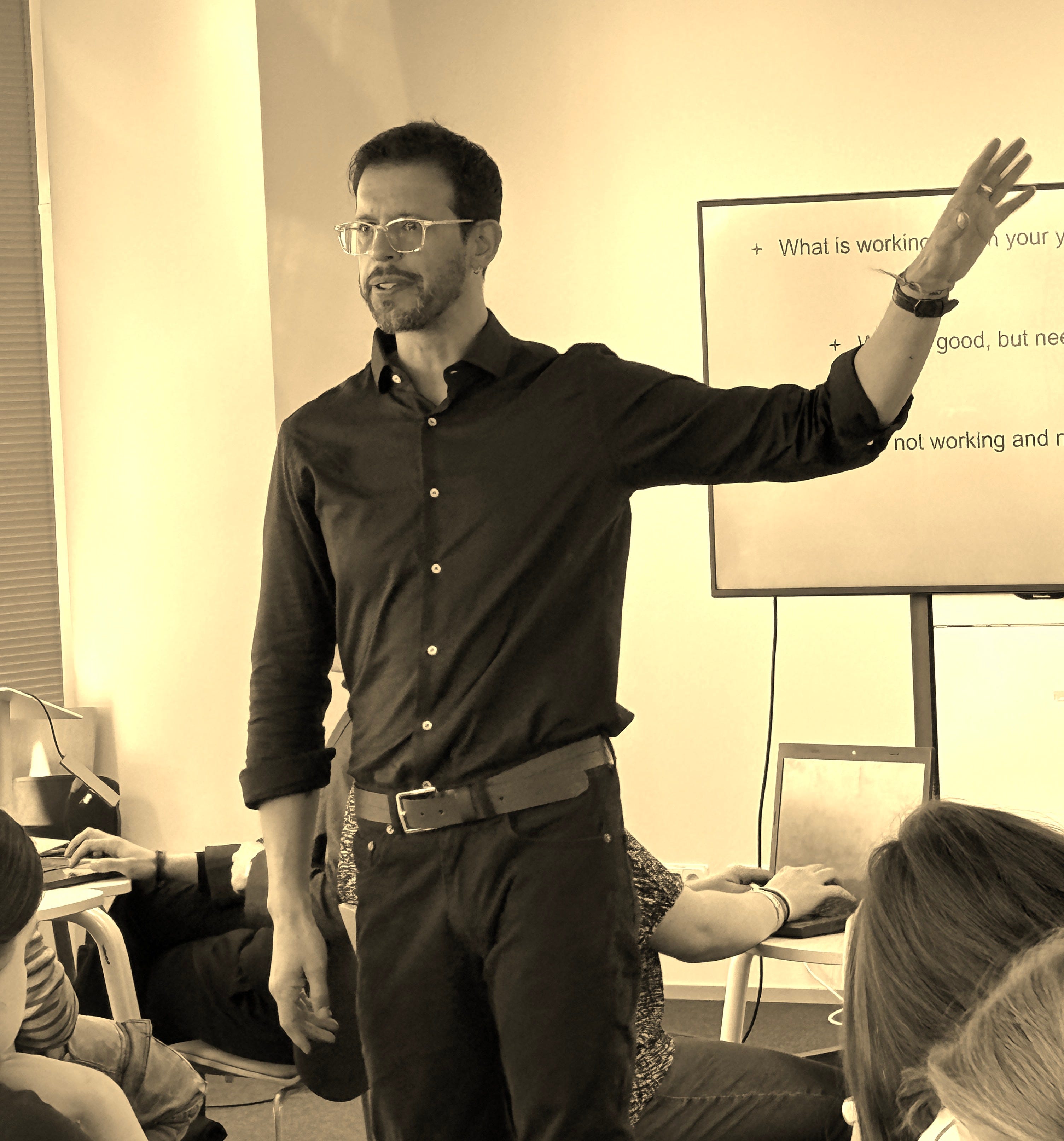
Then I share a personal memory. My first encounter with the word “democracy” at school came when my teacher announced: “Today, we are going to learn about democracy!” As a shy but curious child, I raised my hand and asked, “Why?” The teacher’s reply: “Because I say so — shut up!”
Audiences always laugh. There is something absurd and painfully ironic about being introduced to democracy through an act of authoritarian silencing. I laughed too — until I walked into a classroom a few weeks ago and watched it happen all over again.
A Classroom Frozen in Time
The setting: an English lesson in a teacher-training school in a country widely regarded as having one of the best education systems in the world. The topic: Democracy. I arrived curious and hopeful.
The classroom was arranged in traditional rows — students staring at each other’s backs, a smart screen displaying questions, the teacher setting the tone. The lesson unfolded in three rounds of ‘discuss with your neighbour for 3 minutes’, each cut short after ninety seconds or so. First: Is democracy good or bad? Then: Does democracy need limits? And finally — astonishingly, as an afterthought — what actually is democracy?
The answer to the last question came not from the students, but from a textbook, where the teacher directed them: “Democracy is the rule of the majority. As a minority, you need to respect the rule of the majority and abide by what they decide.”
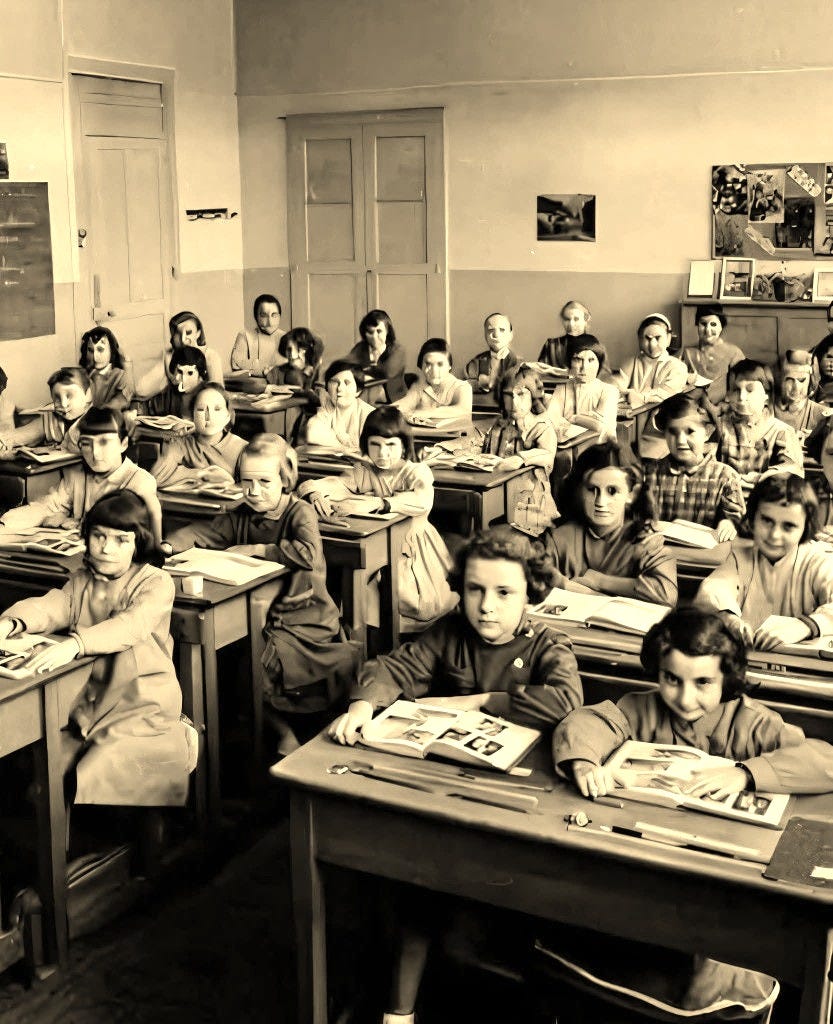
I looked around the room. The students were apathetic — checking the clock, chatting about unrelated things, or simply sitting in silence, waiting for it to end. No round tables. No exploration of their own experiences as citizens. No reference to the tensions, contradictions, or ongoing struggles that make democracy a living, contested idea rather than a textbook definition. An agenda had to be delivered, and deliver it the teacher did.
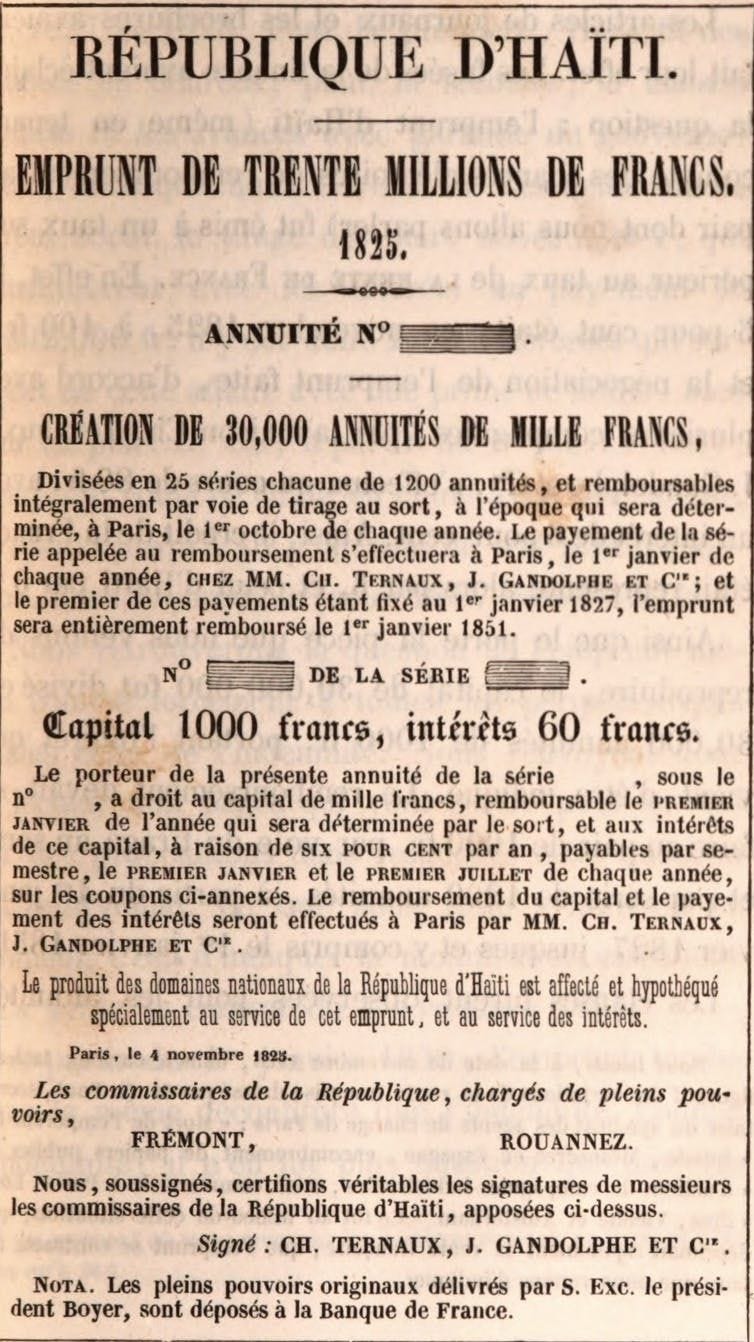
Furthermore, the lesson’s historical framing was narrow and largely Eurocentric — Greece, the French Revolution, the United Nations, elections — with no space for the richer and more contested story of democracy worldwide. Missing entirely were the participatory democratic traditions of Indigenous peoples in the Americas, the brutal irony of France demanding 122 years of reparations from Haiti after refusing to recognise its right to self-determination (and Human Rights!) following the very Revolution being celebrated, or the ongoing struggles of minorities across the globe to have their basic rights upheld against authoritarian majorities.
Democracy, it seemed, was the rule of the majority — full stop — with little curiosity about who gets counted in that majority, and who gets left out.
When the teacher stepped outside to supervise the students during the break — remarking that “they don’t know how to behave and might mess up” — the irony was complete. Young people being taught democracy by an adult who trusted them neither with ideas nor with fifteen minutes of unsupervised time. I seized the 15 minutes to share a different perspective of democratic education with some student teachers who were doing their practice. Not all was lost!
What the Research Tells Us
This classroom is not an anomaly. It is a symptom of a systemic pattern, and the research is unambiguous about its consequences.
The ICCS (International Civic and Citizenship Education Study) 2022 European Report — drawing on surveys of over 66,000 eighth-grade students across 18 European countries — paints a sobering picture. Civic knowledge stagnated or declined across nearly all participating countries between 2016 and 2022; not a single country showed a significant increase, while six showed significant decreases.
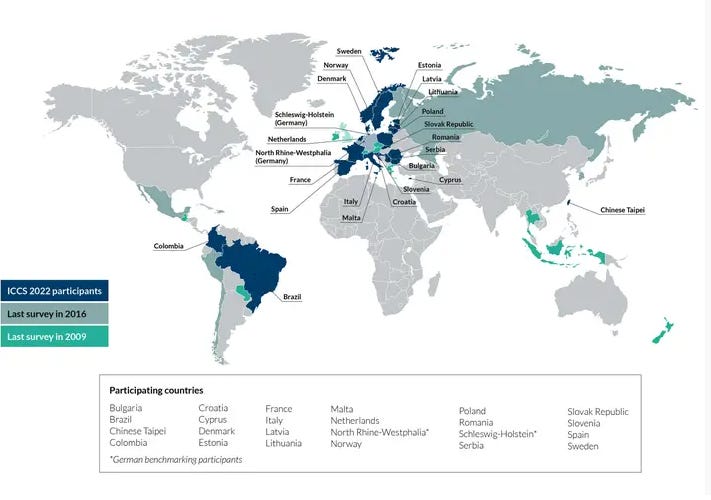
The proportion of students falling below the minimum threshold of democratic competency rose from 9% to 13%. Although roughly three-quarters of students expressed support for democracy in principle, only about half believed their political system actually works well, and around 1 out of 3 boys said that women should have limited political rights. Trust in national and European institutions has fallen across many countries, as has the expectation that students will even participate in elections as adults. Socioeconomic inequalities run deep through these results: students from more privileged backgrounds consistently demonstrate stronger civic knowledge, attitudes, and engagement (Damiani, Losito, Agrusti & Schulz, 2024).
These are not abstract statistics. They represent a generation of young people who have been told about democracy rather than invited to practise it.
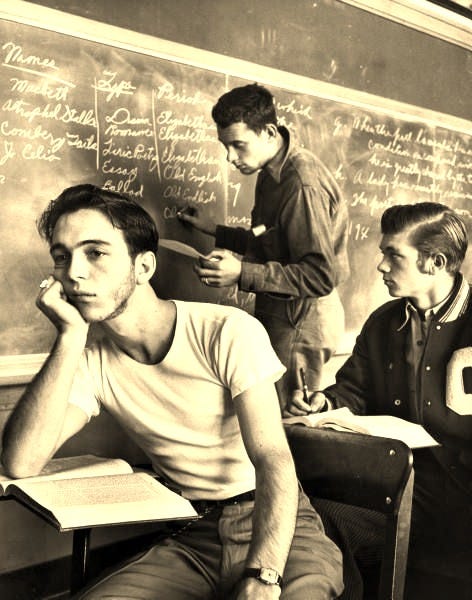
Scholars who study democratic education are clear about the limits of teacher-directed, transmissive approaches. When democracy is reduced to formal procedures — voting, opinion-forming, individual choice — it treats participation as optional and private, obscuring the collective, contested, and often messy reality of democratic life (Seland & Kjøstvedt, 2024; Sant, 2019). When content about democracy is delivered without democratic methods, there is a real risk of something closer to indoctrination: learners adopt the teacher’s view rather than developing their own capacity to deliberate (Hoggan & Hoggan-Kloubert, 2023). Strongly teacher-directed, transmissive models create reliance on ready-made answers from authorities — echoing, however unintentionally, autocratic tendencies rather than democratic inquiry (Coulter & Herman, 2020; Hoggan-Kloubert et al., 2024).
Even in contexts where the stated goal is democratic or ‘radical’ education, coercive or manipulative methods aimed at producing ‘right’ views undermine the autonomy and plurality that democracy depends on (Hoggan & Hoggan-Kloubert, 2023). And when political actors or institutions use adult education to steer people toward specific orientations — however well-intentioned — they risk paternalism of a different kind (Nohl, 2025).
The classroom I visited that day was not doing anything illegal or even unusual. It was following a standardised curriculum, separating children by age, using an approved textbook, and ticking the required boxes. That is precisely the problem.
The Hidden Curriculum of How We Teach
There is something that researchers call the ‘hidden curriculum’ — the implicit lessons transmitted not through content but through structure, relationship, and power. When we teach democracy in rows, with timed pair discussions that are cut short, from a textbook that reduces a complex political idea to majority rule, we are teaching something. We are teaching that knowledge comes from authorities, that young people’s experiences and questions are secondary to the syllabus, that participation means compliance.
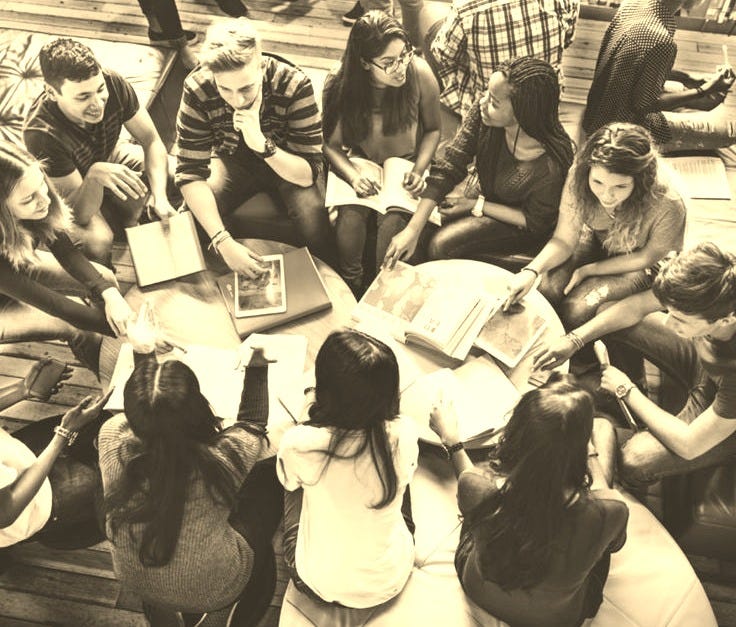
Scholars advocate instead for what some call ‘thick’ or ‘deep’ democracy in education: approaches grounded in dialogue, shared decision-making, futures literacy, and what Carr-Chellman and colleagues describe as ‘power with’ rather than ‘power over’ learners (Carr-Chellman et al., 2023; Barcinas & Fleener, 2023; Przybylska & Dobrzyniak, 2024). The educator’s role shifts from transmitter of fixed truths to facilitator of open-ended conversation, multiple perspectives, and shared responsibility (Petrie et al., 2019; Hill et al., 2023).
Democracy, in this view, is not a subject to be taught. It is a practice to be cultivated — and that cultivation begins in the very spaces where young people spend most of their waking hours.
A Century-Old Alternative We Keep Forgetting
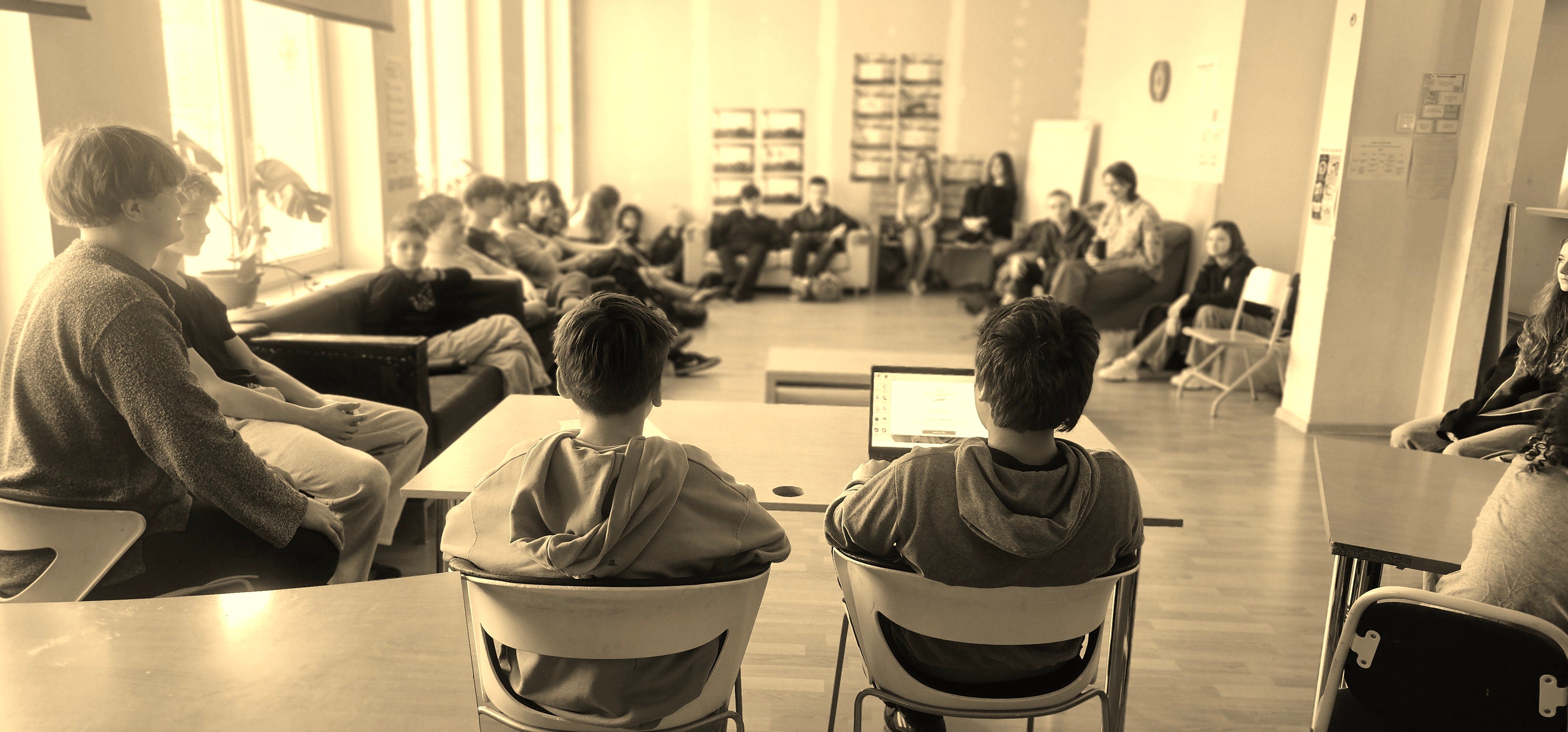
The good news is that we do not need to invent a new model. Educators and communities have been building it for over a hundred years. Democratic schools — from the early experimental communities of the early twentieth century to the thriving network of schools affiliated today with EUDEC (the European Democratic Education Community) — have long demonstrated that learning about democracy works best when it is inseparable from living it. Their core practices are worth naming clearly, because they represent not a utopian fantasy but a documented, replicable reality:
Democratic governance: Students and adults participate together in making decisions that shape school life — rules, learning possibilities, conditions, conflict resolution, excursions, budget allocation, and even, in some schools, the hiring and dismissal of staff. Decision-making power is shared, not delegated as a token gesture. Young people experience themselves as genuine stakeholders in their community. This, in other words, means learning about democracy while finding a balance between freedom and responsibility.
Self-directed learning: Rather than delivering a standardised curriculum for standardised assessment, democratic schools centre the development of learning skills and self-knowledge. Young people are supported to discover their own curiosity, pursue their own questions, and take responsibility for their own growth. The goal is not a uniform body of content but a person capable of navigating an uncertain world with confidence and agency.
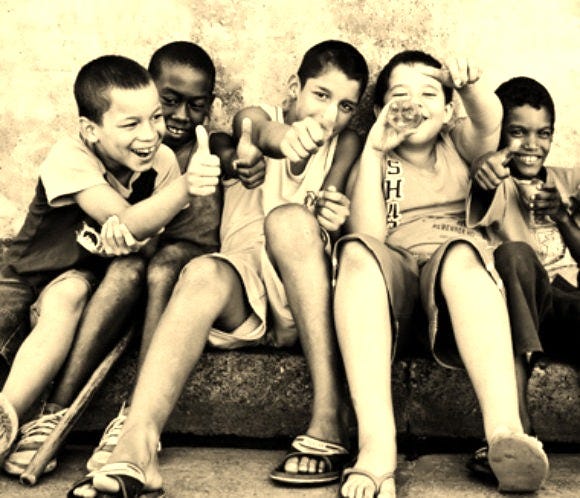
Age-mixing: Children and young people of different ages learn alongside one another, rather than being sorted into year groups. This promotes learner-initiated learning experiences, within a context of natural scaffolding — older students support younger ones, developing empathy, communication, and leadership — while younger students are stretched and inspired by what they see around them. The social fabric of the school resembles a community, not a factory.
Free play and free time: Unstructured time is not a reward or a break from ‘real’ learning — it is itself essential learning. Free play supports creativity, curiosity, and the development of communicative and social skills that no lesson plan can fully teach. Young people learn to navigate boredom, conflict, imagination, and collaboration on their own terms.
These are not soft or supplementary features. They are the structural conditions under which democratic dispositions — the habits of listening, questioning, negotiating, and taking responsibility — can actually take root. You cannot learn to swim without water. You cannot learn democracy without practising it. This is not to mean that when a conventional school wants to become a more democratic place it needs to reject a timetable, lessons or even exams. After all, a structure is needed! The true power of democratising learning is that the structure is co-created with young people, rather than imposed onto them.
The Stakes Are High
We live in a moment of acute democratic fragility. Political manipulation, polarisation, and the erosion of institutional trust are not abstract threats — they are the lived context of the young people sitting in classrooms right now. The ICCS data shows that civic knowledge is declining, trust is falling, and the expectation of participation is shrinking. Against this backdrop, teaching democracy as ‘the rule of the majority, period’ — from a textbook, in rows, with pair discussions cut short — is not merely uninspiring. It is a missed opportunity of historic proportions.
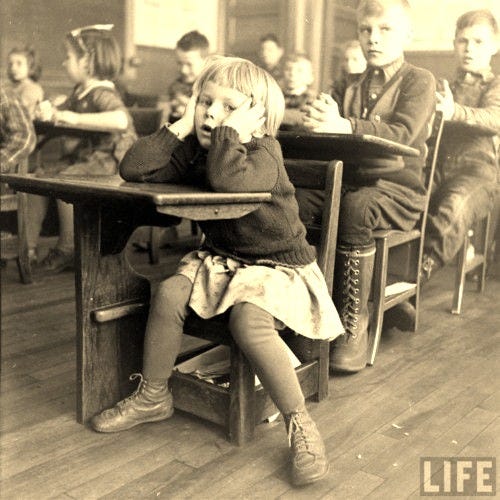
The challenge is not simply one of pedagogy. It is one of imagination, courage, and political will. Schools are institutions embedded in systems — systems that often reward compliance, standardisation, and measurable outputs over the messy, living work of genuine democratic formation. Changing that requires actors at every level: teachers willing to reimagine their role, school leaders willing to share power with their communities, families willing to trust young people with real responsibility, and local authorities willing to create the conditions — legal, financial, cultural — in which democratic schools can flourish.
An Invitation
Unmute Learning and EUDEC (European Democratic Education Community) believe that the democratisation of learning is not a distant ideal — it is a present possibility. Across Europe and beyond, democratic schools are demonstrating every day that young people, when trusted, rise to that trust. That when given genuine voice, they use it thoughtfully. That when invited into community, they build it.
We invite teachers, school leaders, families, and local authorities to join us in that work. Not to adopt a single model or follow a single script, but to ask the question that the classroom I visited that day never asked: What would it look like if our students actually experienced democracy here, today, in this room?
The conversation starts with that question. We would love to have it with you.
Charlie Moreno-Romero, Ph.D
References
Barcinas, S., & Fleener, P. (2023). Adult Education, Futures Literacy, and Deep Democracy: Engaging Democratic Visioning and Anticipatory Futures For More Sustainable Futures. Adult Learning, 34, 131–141. https://doi.org/10.1177/10451595231166726
Bienengräber, T. (2014). Educating competencies for democracy. Journal of Moral Education, 43, 536–539. https://doi.org/10.1080/03057240.2014.906936
Carr-Chellman, D., Rogers-Shaw, C., & Hill, L. (2023). Democracy and Adult Education Practice: Pathways Towards Renewal. Adult Learning, 34, 127–130. https://doi.org/10.1177/10451595231193420
Coulter, X., & Herman, L. (2020). The Lure of Autocratic Education in a Somewhat Democratic Society. Athens Journal of Education. https://doi.org/10.30958/aje.7-4-1
Damiani, V., Losito, B., Agrusti, G., & Schulz, W. (2024). ICCS 2022 European Report: Young Citizens’ Views and Engagement in a Changing Europe. IEA. https://www.iea.nl/publications/study-reports/national-reports-iea-studies/iccs-2022-european-report
Fleener, M., & Barcinas, S. (2022). Democracy’s Relationship With the Future: Transforming Society’s Promise. Journal of Transformative Education, 20, 176–188. https://doi.org/10.1177/15413446221103174
Hill, A., Appel, M., Fuentes, A., & Nixon, M. (2023). Book Review: Creative Universities: Reimagining Education for Global Challenges and Alternative Futures. Adult Education Quarterly, 73, 335–337. https://doi.org/10.1177/07417136231181887
Hoggan, C., & Hoggan-Kloubert, T. (2023). The Ethics of Radical and Transformative Education. Adult Education Quarterly, 73, 363–381. https://doi.org/10.1177/07417136231187840
Hoggan, C., Hoggan-Kloubert, T., & Owen, R. (2023). Living Democracy: Social Structures that Promote Civic Learning. Adult Learning, 34, 168–180. https://doi.org/10.1177/10451595221149765
Hoggan-Kloubert, T., Hoggan, C., & Luthardt, N. (2024). Adult education, democracy, and totalitarianism. European Journal for Research on the Education and Learning of Adults. https://doi.org/10.3384/rela.2000-7426.4940
Lima, L. (2023). Democratic adult education as a research problem in the context of post-democracy. Adult Education Discourses. https://doi.org/10.34768/dma.vi24.693
Nohl, A. (2025). Directive adult education by political actors. European Journal for Research on the Education and Learning of Adults. https://doi.org/10.3384/rela.2000-7426.4794
Petrie, M., McGregor, C., & Crowther, J. (2019). Populism, democracy and a pedagogy of renewal. International Journal of Lifelong Education, 38, 488–502. https://doi.org/10.1080/02601370.2019.1617798
Przybylska, E., & Dobrzyniak, M. (2024). Professionalisation of Adult Educators in the Context of Democracy. Viae Educationis: Studies of Education and Didactics. https://doi.org/10.15804/ve.2024.02.02
Sant, E. (2019). Democratic Education: A Theoretical Review (2006–2017). Review of Educational Research, 89, 655–696. https://doi.org/10.3102/0034654319862493
Schulz, W., Ainley, J., Fraillon, J., Losito, B., Agrusti, G., Damiani, V., & Friedman, T. (2024). ICCS 2022 International Report: Education for Citizenship in Times of Global Change. Springer/IEA. https://www.iea.nl/publications/iccs-2022-international-report
Seland, I., & Kjøstvedt, A. (2024). How do teacher educators from Denmark, Finland, Norway and Sweden teach for active democratic participation? Scandinavian Journal of Educational Research, 69, 607–622. https://doi.org/10.1080/00313831.2024.2322967
Love it! This post really reminds me of the book "The Children are Watching." In that book they discuss a lot of how children and teens pick up the hidden curriculum much more effectively than the explicit curriculum. Great article.
Oh, I am so excited about this article and feel so aligned! Brilliant post and will send email now 🙏